Chereads
CloudaryBooks & Reference
4.21.19K Reviews
- Version
- 4.3.9
- Installs
- 500.00K
- Age Rating
- Teen
Screenshots




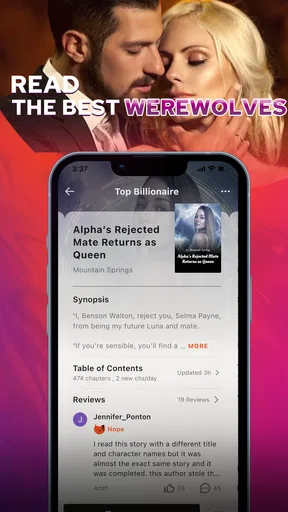
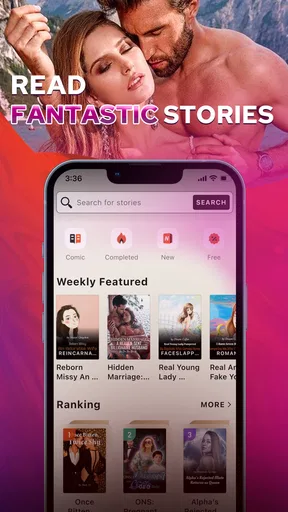
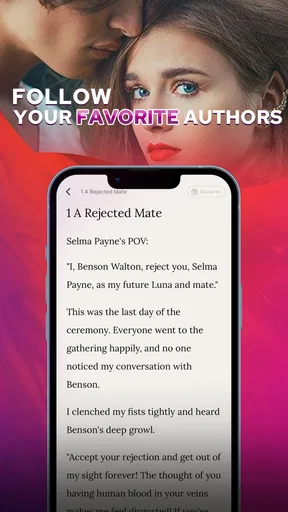
Our Review of Chereads
 Analysis by Appyee
I approached Chereads as a reader looking for something more flexible than a single digital book, but less formal than a traditional reference app. It is a free Books & Reference app from Cloudary, built around serialized novel reading and discovery. After spending time with it, my impression is that its strongest appeal comes from the feeling of always having another chapter ready, while its biggest weakness is that this kind of reading platform can demand more patience and attention than a finished ebook.
The app has a 4.2 average from around 18 thousand ratings, with more than 500 thousand installs. Those figures suggest that Chereads has found a real audience, although they do not tell me whether every reader will enjoy its particular rhythm. I would recommend it first to people who like ongoing stories, frequent browsing, and the small habit of checking in for another installment. I would be more cautious with readers who want a carefully edited, complete book without interruptions or a large amount of choice.
How Chereads feels in everyday use
The first thing I noticed is that Chereads is not trying to behave like a simple bookshelf. Its identity is closer to a reading feed combined with a serialized fiction library. That changes how I use it. Instead of opening the app only when I have already chosen a title, I can spend time looking through stories, testing a premise, and deciding what deserves a place in my reading routine.
That discovery-first approach works well when I have a few spare minutes. On a commute, during a lunch break, or before bed, I can read a short portion without committing to a complete novel in one sitting. The format also creates a useful sense of momentum. A story released in installments gives me a reason to return, whereas a conventional ebook can sit untouched because it feels like a larger commitment.
At the same time, this is not the ideal app for every reading mood. When I want a self-contained story with a clear ending, the serialized model can feel unfinished by design. I may become interested in a plot only to realize that the satisfying conclusion requires continued reading over time. That is not necessarily a flaw, but it is an important trade-off to understand before making Chereads a primary reading app.
The store summary calls it a highly addictive novel reading platform, but I would treat that as a description of its intended experience rather than a promise. The app can certainly encourage frequent visits through new discoveries and continuing stories, yet the quality of that experience depends heavily on finding titles that match my taste. The platform is most enjoyable when I actively curate what I read instead of opening every recommendation indiscriminately.
Finding stories without losing your reading thread
My practical advice is to separate browsing from reading. When I have time, I explore several premises and sample the writing. When I am tired or short on time, I return to the story I have already chosen. Mixing those two activities can make the app feel busier than it needs to be, especially for someone who opens it expecting the calm, shelf-like experience of an ebook reader.
I also find it useful to judge a novel by more than its opening hook. A dramatic premise may catch my attention, but serialized fiction has to keep its pacing over many installments. I look for a consistent reason to continue, characters with room to develop, and chapter endings that create curiosity without making every section feel artificially cut off. This is one of the most important differences between Chereads and a standard book app: the ongoing structure matters as much as the initial idea.
For a reader who enjoys romance, fantasy, drama, or other long-form fiction delivered gradually, that structure can be a genuine strength. For someone searching for manuals, academic references, news, or practical nonfiction, Chereads is a less natural fit. Its category is Books & Reference, but its real personality is clearly centered on novels rather than broad reference material.
Reading habits that make the app more useful
A realistic routine is to choose one main story and keep a second option for moments when the first becomes too intense or slow. This prevents the endless browsing loop that can happen in a large fiction catalog. I would also avoid starting several stories at once unless I am comfortable tracking different characters, settings, and update rhythms.
Another useful habit is to treat early chapters as a trial period. I do not feel obligated to continue simply because I have already invested a little time. Serialized reading rewards commitment, but it also magnifies the cost of following a story that no longer interests me. Chereads works better when I am willing to stop, reassess, and choose something that fits my current mood.
The app is free to install and use, which makes experimenting easy. However, in-app purchases range from $0.99 to $199.99 per item. That wide range is a reason to pay attention to the purchase flow and to decide in advance how much I am comfortable spending. Free access lowers the barrier to trying a story, but it does not automatically mean that every part of the reading journey will be free.
I would especially recommend setting a personal spending rule before getting deeply involved in a long-running novel. For example, I might read freely for a while, then decide whether a particular story is worth any optional purchase. The important point is to make that decision while thinking clearly, not at the exact moment a cliffhanger creates pressure to continue.
What the current version tells me about the product’s direction
Chereads is currently listed at version 4.3.9, and the app supports Android 5.0 and later. The version number shows a product that has moved beyond an initial launch build and is being maintained as an established reading service. The app was released on January 17, 2022, so its current identity comes from continued development rather than a brand-new experiment.
I see that evolution in the overall concept. A serialized reading platform has to keep balancing three things: helping readers discover stories, making ongoing reading comfortable, and giving them a reason to return. Those goals can compete with one another. More recommendations may improve discovery but also create clutter. More ways to encourage return visits may help regular readers but distract people who simply want to read quietly.
I would not assume that a newer version automatically solves every usability issue. Version 4.3.9 is useful context because it tells me which release readers can expect today, but a version number alone does not explain how every screen behaves or whether every title follows the same access model. My view of the app therefore comes from its current reading experience and its business model, not from treating the update number as proof of perfection.
For existing users, the most meaningful effect of ongoing maintenance is likely continuity. A reader who has already built a habit around serialized stories benefits from using a platform that is still presented as an active product rather than an abandoned catalog. That matters because long-form reading depends on trust: I want to feel that the app remains worth returning to after I have invested time in a story.
New users should still begin gradually. I would install it, explore the catalog, read enough of a few different stories to compare their tone, and only then decide whether it deserves a permanent place on my phone. This approach is more reliable than judging the entire app from one title, because the reading experience is closely tied to the particular story selected.
Who will probably enjoy it most
Chereads is a strong match for readers who like cliffhangers, continuing plots, and the anticipation of another installment. It also suits people who read in short sessions. A person with ten minutes between appointments may get more value from an ongoing novel platform than from an app designed around long, uninterrupted chapters.
It can also work for readers who are tired of rereading the same familiar books and want a steady stream of new fiction to investigate. The low entry cost makes sampling less intimidating. I can try a story without first buying a complete ebook, then decide whether the writing and pacing are worth more of my time.
The app is less suitable for readers who prefer literary curation, fixed editions, or a quiet library with minimal commercial pressure. It is also not my first choice when I need reliable factual reference material. A conventional ebook reader is better for purchased books I already own, while a dedicated reference app is better for definitions, manuals, or structured information. Chereads earns its place through serialized fiction, not by replacing every kind of reading tool.
Where the free model needs careful attention
The free price is a meaningful advantage, particularly for curious readers who want to sample several stories. Still, free access and frictionless access are not the same thing. The presence of optional purchases means I need to understand what I am choosing before confirming anything. I would not rush through a payment screen simply because I want to reach the next chapter immediately.
This also affects how I evaluate value. A reader who finishes only one story may find the app perfectly adequate without spending money. Someone who follows multiple long-running novels may view optional purchases differently. The right choice depends on reading volume, patience, and how much control I want over the pace of a story.
The Teen content rating is another useful signal for households. It tells me that the app is not positioned as a children’s reading space. Parents and younger readers should consider whether the individual stories are appropriate for them rather than assuming that every title has the same tone. A platform with many novels can contain a wider range of themes than its general category suggests.
Small workflow improvements I would use
My first concrete tip is to keep the app from becoming a distraction by choosing a reading window. Serialized platforms are good at turning a quick check into a longer browsing session. If I open Chereads for a short break, I go directly to my current story instead of exploring every recommendation. That simple distinction helps preserve the reading habit without letting discovery take over.
My second tip is to compare the first few chapters of stories with different pacing. One title may rely on rapid drama, while another may build its world more slowly. Testing both helps me identify whether I dislike the app or merely chose a poor match. This is a non-obvious advantage of a broad novel platform: it gives me room to learn what kind of serialized pacing I actually enjoy.
My third tip is to monitor emotional fatigue. Long-running fiction can be entertaining but demanding, especially when several stories end chapters with tension. I prefer alternating a high-stakes story with something lighter. That makes the app feel like a flexible reading shelf rather than a constant stream of suspense.
A fourth trade-off concerns commitment. Starting many novels creates variety, but it also makes it harder to remember where I am. I would rather follow fewer stories with genuine interest than collect a large unfinished queue. This matters more in Chereads than in a normal ebook library because the appeal comes from returning to an active narrative, not merely owning titles.
What still keeps Chereads from being a universal reader
The biggest limitation is inherent to the format: serialized reading is not the same as finished-book reading. If I need closure today, Chereads may frustrate me. Even when a story is enjoyable, the experience depends on waiting, pacing, and continued engagement. Readers who dislike cliffhangers or prefer to read at their own uninterrupted speed should probably choose a conventional ebook service instead.
Discovery can also become work. A large selection sounds attractive, but finding a story that maintains its quality requires judgment from the reader. I would like a recommendation system to save me time, yet recommendations can never fully understand why I enjoyed one particular plot or writing style. The more I rely on automated suggestions, the more important it becomes to check whether the actual sample matches my expectations.
The purchase model adds another layer of decision-making. Even though the app is free, optional items can make the cost of following a story less predictable than buying a single completed ebook. That does not make the model wrong, but it makes budgeting part of the reading experience. A reader who wants one clear price may feel more comfortable with a traditional paid book.
There is also a difference between reading convenience and literary reliability. Chereads is designed to keep stories moving through a digital platform, but I would not use it as my only source for carefully edited reference works or authoritative information. Its value is entertainment and ongoing fiction discovery. Expecting it to serve as a general-purpose knowledge library would lead to disappointment.
What I would like readers to watch over time
For current users, I would watch how the app continues to balance new story discovery with a clean reading routine. The best evolution would make it easier to return to ongoing novels without burying them beneath fresh recommendations. I would also pay attention to how clearly the app communicates optional purchases, since transparency is especially important when a reader is emotionally invested in a story.
I would watch the consistency of the catalog as well. A platform can have an excellent concept, but the day-to-day experience depends on whether readers regularly find stories that hold their attention. If the selection keeps matching different tastes, Chereads becomes more valuable over time. If browsing produces many appealing premises but few satisfying continuations, the novelty may wear off.
Existing readers should also consider whether the current version fits their device and habits. Android users on version 5.0 or later meet the stated minimum operating-system requirement, while the version number identifies the release to look for when checking compatibility. That is a practical detail, particularly for anyone using an older phone and deciding whether to make Chereads part of a regular routine.
My final view is positive but specific. Chereads is not simply a replacement for an ebook shelf, and I would not recommend it on that basis. I recommend it to the friend who enjoys discovering ongoing novels, reads in short bursts, and likes having another chapter waiting. The free entry point makes trying it easy, while the optional purchase range means I would use it with a little spending discipline.
After considering its current version, its development since release, and the way its serialized format shapes everyday reading, I see a focused app rather than an all-purpose library. Its real strength is turning spare minutes into a continuing fiction habit. If that sounds appealing, Chereads is worth exploring. If you want completed books, fixed pricing, or factual reference material first, a conventional ebook or reference app will probably serve you better.
For me, the deciding test is simple: can I find one story I genuinely want to return to? If the answer is yes, the platform’s recurring format starts to make sense. If every title feels like a temporary distraction, the app will not overcome that mismatch. That is why I would try it freely, sample carefully, watch the purchase prompts, and let the quality of the stories—not the promise of endless reading—determine whether it stays on my phone.
Verdict
Strengths of Chereads
- Clean, distraction-free interface for focused reading
- Supports personalized reading goals and progress tracking
- Useful recommendations for discovering new books
- Social features help connect readers with similar interests
- Available across devices for convenient access
Limitations of Chereads
- Some features may require creating an account
- Book availability can vary by region and language
- Social content may feel limited in smaller communities
- Reading statistics may not satisfy advanced users
- Occasional syncing issues can affect reading progress
Other Releases by Cloudary
View All
WebNovel
Books & Reference4.0
Similar Picks in This Category
View All
Google Play Books & Audiobooks
Google LLC4.7

네이버 - NAVER
NAVER Corp.3.5

Wattpad - Read & Write Stories
Wattpad.com3.7

King James Bible - Verse+Audio
Ozion4.8

Bible Offline-KJV Holy Bible
Bíblia Offline4.9

Amazon Kindle: Reading App
Amazon Mobile LLC4.8
Frequently Asked Questions
What is Chereads, and what can I use it for?
Chereads is a reading-focused app designed for discovering and enjoying digital stories, books, or serialized content from a mobile device. After installing it, users can typically browse available titles, open a story page to view its description and details, and read selected content within the app. The exact catalog, categories, and reading tools may vary depending on the platform, region, and current version.
Is Chereads free to download and use?
Chereads may be available to download without an upfront charge, but free access does not necessarily mean that every title or feature is completely free. Some content can be restricted by in-app purchases, subscriptions, credits, advertising, or other limitations. Before downloading, it is worth checking the app-store listing for current pricing, supported payment options, and whether recurring billing applies to any premium plan.
Does Chereads require an internet connection?
An internet connection is generally needed when first opening the app, creating or accessing an account, browsing the catalog, synchronizing reading progress, and loading online content. Depending on the version, some stories or pages may be saved for offline reading, although this feature may be limited to certain titles or premium users. Users should check the app settings and download controls before relying on offline access.
Is Chereads suitable for children and younger readers?
Suitability depends on the individual titles available through Chereads, because reading platforms can include content aimed at different age groups and may contain romance, mature themes, violence, or sensitive subjects. Parents should review the store age rating, the app’s content descriptions, and any available parental controls before allowing a child to use it. Account and purchase settings should also be protected.
What permissions and account information does Chereads request?
The permissions required by Chereads can differ between Android and iOS and may change with future updates. A reading app may request network access, notifications, storage-related access for downloads, or account information such as an email address or social-login details. Review the privacy policy and the permissions shown during installation, and only provide information that is necessary for the features you intend to use.
